Start at the Beginning (The Dinosaur Way to Set Up Tech)

There’s a certain type of business owner who loves a shiny new tool.
A new CRM.
A new AI app.
A new automation platform.
A new “all-in-one” system that promises to finally make everything feel organised.
And honestly? I get it.
New tools feel productive. They give us the sense that we’re fixing something. That this next app, this next integration, this next system will finally make the business run smoothly.
But what I see time and time again is people building increasingly complicated systems on top of foundations that were never properly set up in the first place.
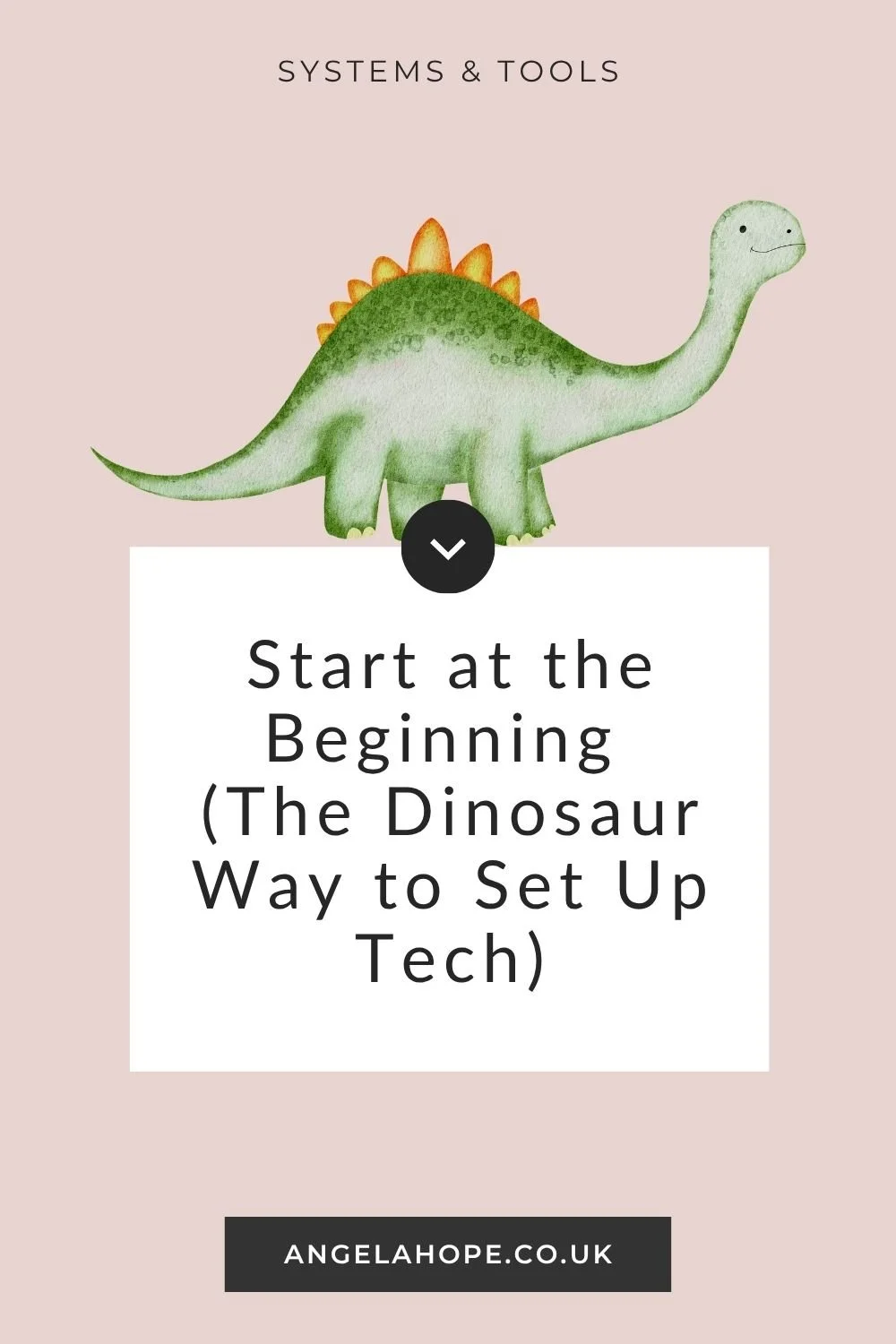
It’s a bit like building Jurassic Park before checking the fences work.
The dinosaurs themselves aren’t necessarily the problem. The foundations are.
Most Business Chaos Starts With the Basics
When people tell me their systems feel overwhelming, it’s rarely because they don’t have enough software.
Usually, it’s because the underlying structure is messy.
Files are saved in random places.
Important emails disappear into overflowing inboxes.
Passwords live in old notebooks or buried in WhatsApp messages.
Client processes only exist inside someone’s head.
No one knows which form connects to what.
Half the business runs on memory and hope.
Then instead of simplifying things, another tool gets added to “fix” the chaos.
But complicated tools layered onto disorganised systems don’t create efficiency. They usually just create faster confusion.
And modern business culture almost encourages this.
We’re constantly being told to automate more, optimise more, streamline more. Every week there’s another AI tool promising to save ten hours a week or revolutionise your workflow.
But no automation can compensate for foundations that don’t exist.
The Dinosaur Way 🦕
Imagine, for a moment, that dinosaurs were real and somehow ended up in your care.
You probably wouldn’t immediately start teaching them tricks or buying them expensive accessories.
You’d start with the basics:
secure fencing
food
routines
safety
clear systems
contingency plans
You’d make sure the essentials worked first because otherwise everything else becomes slightly catastrophic.
Business tech is surprisingly similar.
Before adding complicated automations or connecting twelve different platforms together, you need a solid structure underneath it all.
Not glamorous.
Not particularly Instagram-worthy.
But incredibly important.
Because simple foundations are what make businesses feel calm to run.
The Foundations That Matter Most
1. A Clear Folder Structure
Digital clutter creates mental clutter.
One of the quickest ways to feel constantly behind is not knowing where anything is stored. If your downloads folder has become a graveyard of random PDFs and duplicate images, you are definitely not alone.
But creating a simple folder structure genuinely makes a huge difference.
Think about:
client folders
branding assets
website images
contracts
invoices
content drafts
legal documents
The goal isn’t perfection. It’s simply making things easy to find later.
Future-you should not need detective skills to locate a logo file.
2. Password Management
This is one of those things people often delay because it feels tedious — until they urgently need a login and can’t find it anywhere.
A proper password manager instantly removes so much friction from daily business life.
No more:
searching old emails
resetting passwords repeatedly
sharing passwords insecurely
trying the same three combinations over and over
It’s not exciting tech. But it’s foundational tech.
And honestly, those are usually the systems that make the biggest difference.
3. Consistent Naming Conventions
If you’ve ever found files called:
FINAL.pdf
FINAL-V2.pdf
FINAL-REAL.pdf
FINAL-USE-THIS-ONE.pdf
…then you already understand the problem.
Consistent naming conventions sound incredibly boring until you actually implement them and suddenly everything becomes easier to manage.
Simple file names with dates or clear labels save so much time and mental energy.
Tiny changes like this create surprisingly big improvements in how organised your business feels.
4. One Main Task System
You do not need:
sticky notes
three project management apps
a paper planner
random screenshots
your memory
voice notes to yourself at midnight
Choose one primary place to manage tasks and commitments.
That doesn’t mean you can never jot something down elsewhere. But there should be one trusted system that holds everything important.
A lot of productivity struggles aren’t actually about laziness or motivation. They’re often about having too many disconnected systems competing for attention. Simple systems reduce overwhelm because your brain stops trying to remember where everything lives.
5. Basic Client Processes
Before automating anything, make sure the manual process actually works first.
This is where so many businesses accidentally overcomplicate things.
They try to automate:
onboarding
emails
scheduling
proposals
workflows
…before they’ve even properly defined the process itself.
But automation works best when it supports clarity — not chaos.
Sometimes the smartest thing you can do is write down the steps manually first:
What happens when someone enquires?
What do they receive next?
What information do you need?
What usually causes delays?
Where are people getting confused?
Once the process feels simple manually, then it’s worth looking at automation.
Fancy Tech Should Solve Problems — Not Create Them
I genuinely love good tech.
I love systems.
I love AI tools.
I love automations that remove repetitive admin.
But I also think there’s a growing tendency to over-engineer businesses unnecessarily.
Not every business needs:
six integrated platforms
advanced automations
complicated dashboards
endless notifications
enterprise-level systems
Sometimes people are using industrial-strength software to manage what is essentially a very straightforward business.
Adding complexity too early often creates more maintenance, more confusion, and more things to break.
It’s a bit like giving a velociraptor roller skates.
Technically impressive.
Potentially entertaining.
But probably not helpful.
Simple First. Clever Later.
One of the biggest mindset shifts in business is realising that simple does not mean unprofessional.
In fact, the businesses that feel calm, organised, and efficient behind the scenes are usually running on surprisingly straightforward systems.
Simple systems:
are easier to maintain
reduce decision fatigue
break less often
are easier to delegate
scale more smoothly
save huge amounts of mental energy
And perhaps most importantly, they leave you with more capacity to actually do your work instead of constantly managing your tools.
Because at some point, the systems themselves can become another form of clutter.
Start at the Beginning
If your business currently feels messy or overwhelming, resist the temptation to immediately download another app.
Instead, pause and look at the foundations.
Ask yourself:
What’s unnecessarily complicated?
What’s missing entirely?
What could be simplified?
What process only exists in my head?
What am I trying to automate before I’ve organised it?
You do not need the fanciest setup to run a successful business. Most of the time, you simply need systems that are clear, reliable, and easy to maintain.
The goal isn’t to build the most impressive tech stack. It’s to build a business that actually works well day to day.
Even with dinosaurs involved.