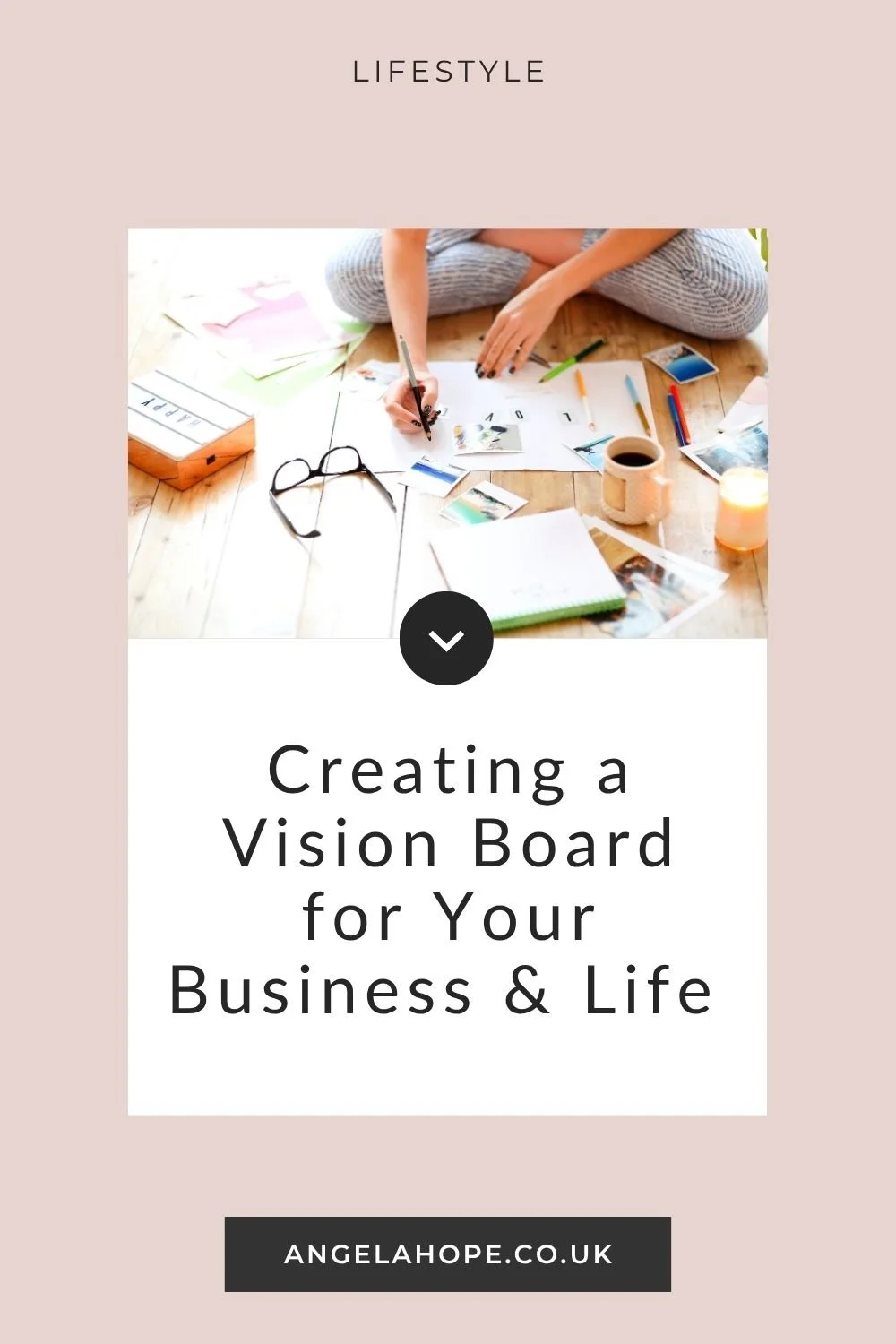
Creating a Vision Board for Your Business & Life (Without Overcomplicating It)

If you’ve ever tried to create a vision board and ended up knee-deep in magazine cuttings, Pinterest boards, and perfectionism… you’re not alone.
The idea is simple: get clear on what you want. But somehow, it often turns into another overwhelming task on the list.
So let’s simplify it.
Why This Matters Now (Not Just in January)
Vision boards tend to be seen as a “New Year” thing. But January is often based on good intentions and guesswork. By the end of April, you’ve got something much more useful: real life data.
You know:
What’s actually been working
What’s felt harder than expected
What you’ve quietly outgrown
What your days really look like (not what you planned them to look like)
This makes it the perfect time to pause and realign. Not to start over, but to adjust.
Because without that check-in, it’s very easy to spend the rest of the year:
Continuing with plans that don’t quite fit
Adding more to an already full plate
Drifting further away from how you actually want life and business to feel
A simple vision board at this point in the year brings you back to centre. It helps you move forward on purpose, not just by momentum.
What This Isn’t
Before we go any further, it’s worth clearing something up.
This isn’t about:
Cutting out perfect-looking lives from magazines
Setting unrealistic goals you’ll forget in a week
Trying to overhaul everything at once
And it’s definitely not about creating something that looks good but doesn’t reflect your real life.
If anything, this should feel… a bit boring.
Because simple, realistic, and aligned will always beat ambitious but unsustainable.
What a Vision Board Actually Needs to Do
A vision board isn’t about aesthetics. It’s about clarity.
It should help you:
Focus on what matters right now
Stay aligned with your goals
Make decisions more easily
If it’s complicated, it’s not doing its job.
If You’re Not Sure Where to Start
Use these prompts:
What parts of my current life or business do I want more of?
What quietly isn’t working anymore?
What would a “good” week actually look like for me?
Don’t overthink it—your first instinct is usually the right one.
Step 1: Start With How You Want Life to Feel
Before you think about business goals or income targets, start here:
How do you want your life to feel? Think:
Calm or busy?
Structured or flexible?
Creative or streamlined?
Write down 3–5 words. That’s your foundation.
Step 2: Choose a Simple Format
You do not need to spend hours crafting this.
Pick one:
Analog (physical)
A notebook page
A corkboard
A single sheet of paper
Digital
Notes app
A simple Canva page
A small, focused Pinterest board
If it takes more than 30 minutes, it’s too much.
Step 3: Add What Matters (Not Everything)
Split your board into two areas:
Life
How you want your days to look
Health, energy, time, family
Business
Type of work you want
Clients you enjoy
Income or schedule goals
Add:
A few images or
Short phrases
That’s it. No clutter.
A Simple Example
Your vision board might look like this:
How I want life to feel:
Calm, spacious, focused
Life:
Morning walks, slower starts, more time at home
Business:
Fewer clients, better projects, systems that run smoothly
No elaborate design. No pressure to make it perfect. Just clarity.
Step 4: Make It Visible (and Useful)
A vision board only works if you actually see it.
Keep it on your desk
Set it as your laptop background
Add it to your weekly planning routine
The goal isn’t to “manifest” something vague, it’s to gently guide your decisions.
Step 5: Let It Evolve
You don’t need to get it “right.” Your vision will change, and that’s a good thing.
Update it when:
Your priorities shift
Something starts to feel off
You gain clarity
Think of it as a working tool, not a finished product.
A Simpler Way to Think About It
Instead of asking: “What do I want my life to look like in 5 years?”
Try: “What would make next month feel better, calmer, or more aligned?”
Start there. Keep it simple.
You don’t need more ideas.
You need a little more clarity, and the space to act on it.
Ready to Simplify?
If your business currently feels more chaotic than clear, your vision board is a good place to start - but it’s only one piece.
The real shift happens when your website and systems support that vision too - so your business runs in a way that actually matches how you want to live.