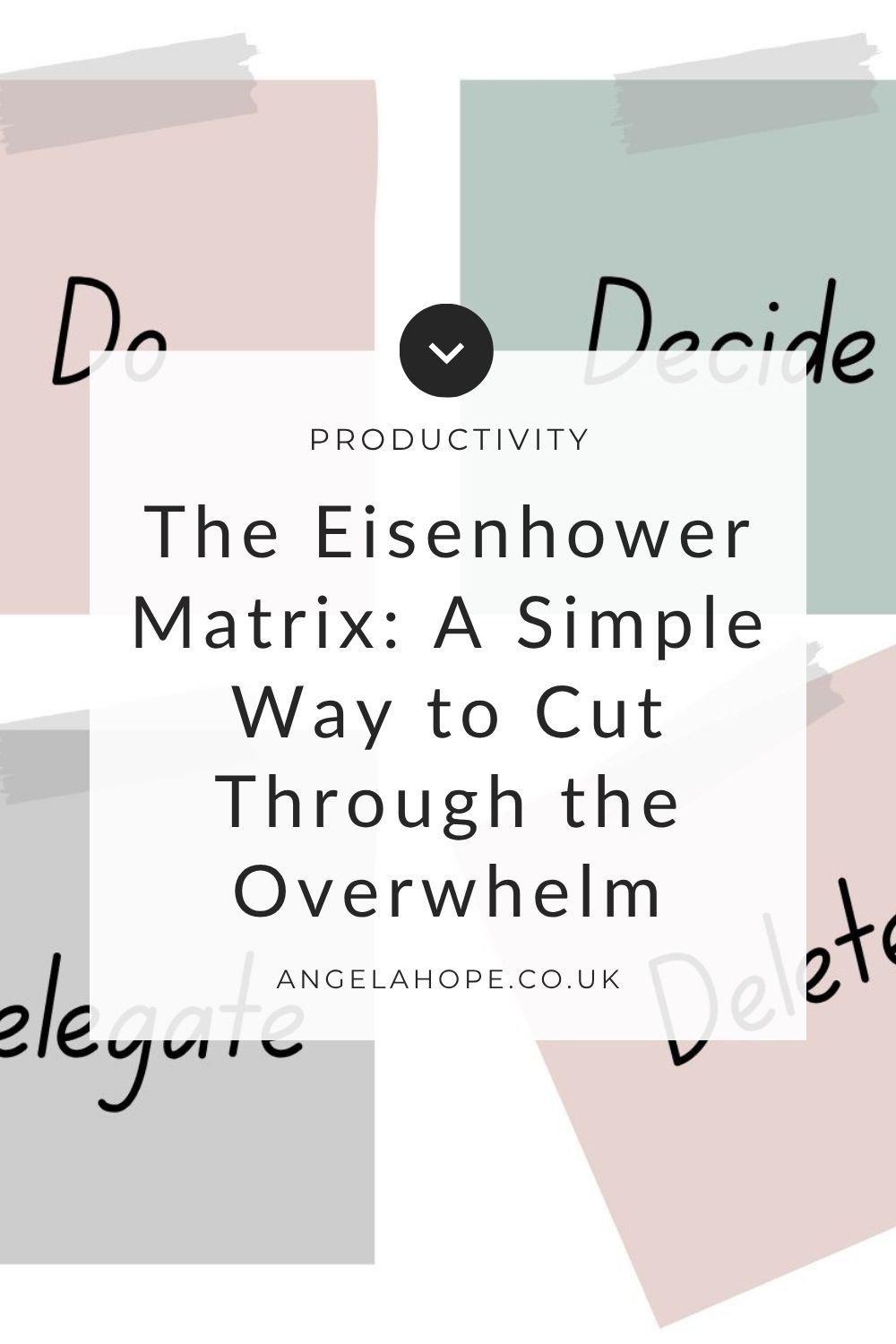
The Eisenhower Matrix: A Simple Way to Cut Through the Overwhelm
Being a mum, running a business, managing a home, and trying to find a moment for yourself means one thing.
Your mind is rarely still.
At any given time, I have a constant stream of thoughts running in the background. Cooking, cleaning, taxi runs, DIY jobs, gardening, client work, emails, marketing, dog walks, life admin. It is a long and ever-changing list.
And despite what we are often led to believe, there is no clear divide between work and home life.
I am writing this during the Easter school holidays, after spending time driving my son to and from work and taking my daughter shopping for an upcoming school trip. In between that, I have been replying to emails, planning my monthly newsletter, and now writing this blog post. All while mentally keeping track of everything else that needs to happen today, including something as simple as what to cook for dinner.
A focused, uninterrupted 9 to 5 working day would feel like a luxury.
So the reality is this.
Prioritising your time is not a nice-to-have. It is essential.
Have You Heard of the Eisenhower Matrix?
The Eisenhower Matrix is a simple but effective way to decide what actually deserves your time and attention.
It works by helping you sort your tasks based on two factors: urgency and importance.
Because not everything that feels urgent is important. And not everything important will demand your attention straight away.
Without a clear way to separate the two, it is very easy to spend your day reacting rather than making intentional progress.
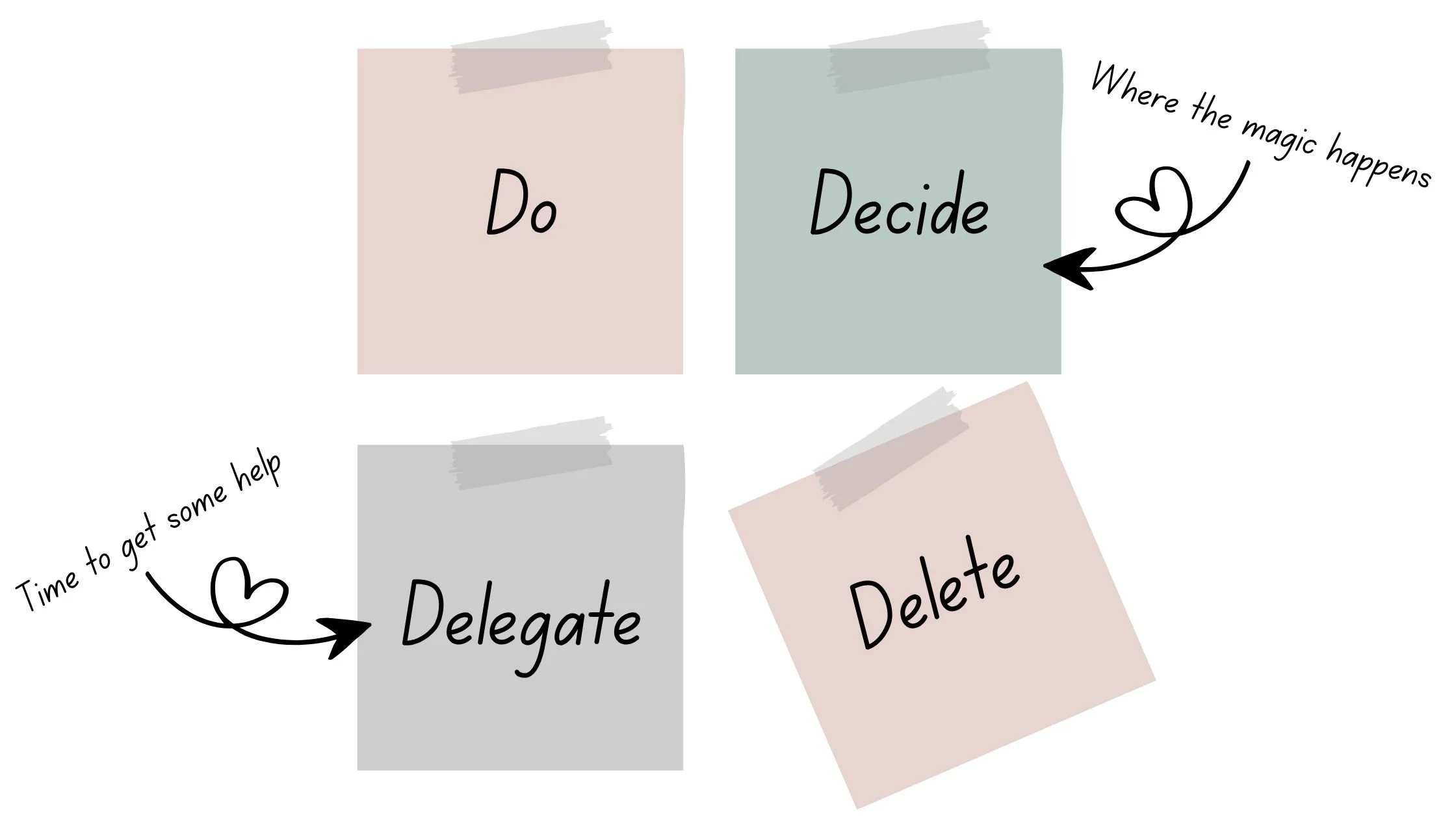
The Four Quadrants
Every task, whether it is a quick job or part of a bigger project, will fall into one of four categories.
Urgent and Important
These are the tasks that need immediate attention. They often come with deadlines or consequences if they are not completed.
This might be a client deadline, an issue that needs resolving, or something unexpected that cannot be ignored.
Some of these tasks are unavoidable. Life and business will always bring a level of urgency. However, if you find yourself constantly working in this space, it can be a sign that everything is being left until the last minute or that there is no space for forward planning.
Over time, this can lead to stress and burnout.
Not Urgent but Important
This is where the most meaningful work happens.
These are the tasks that support your long-term goals and the growth of your business. They are often the reason you started your business in the first place.
This might include improving your website, setting up systems that save you time, planning your content, or nurturing relationships with your clients.
This is also the category I try to consciously protect in my bullet journal. When I review my list, these are the tasks I will often star or highlight, simply to make sure they do not get lost among everything else.
They rarely feel urgent, which is exactly why they are so often pushed aside. It is easy to tell yourself you will get to them later, once everything else is done.
But this is the work that creates progress, consistency, and ease in the long run.
Urgent but Not Important
This is where a lot of busywork lives.
These tasks often come from external expectations. They feel pressing, but they do not necessarily move your business forward.
It might be responding to non-essential emails, dealing with interruptions, or saying yes to something that does not really need your time.
When I am looking at my daily list, these are the tasks I tend to question the most. They are often the ones that feel like they should be done immediately, but with a bit of distance, I can see they are not actually the best use of my time.
Where possible, these are the tasks to delegate, automate, or set clearer boundaries around.
Not Urgent and Not Important
These are the tasks that quietly drain your time.
They are often the easiest to fall into because they require very little effort. Scrolling, overthinking, or endlessly tweaking something that is already good enough.
These are also the tasks that tend to disappear quickly when I do a proper brain dump in my journal. Seeing them written down makes it much easier to recognise that they do not really need to be there at all.
Becoming more aware of these habits is the first step. From there, you can start to reduce them in a way that feels realistic.
A Simple Way I Use This in My Day-to-Day
I do not use a complicated system to apply the Eisenhower Matrix.
Most days, it happens very simply within my bullet journal.
I start with a quick brain dump using rapid logging. Everything goes onto the page. Work tasks, home life, reminders, ideas. It is not organised at this stage, it is just a way to clear my head.
Then I take a moment to look at the list more intentionally.
Instead of asking what I should do first, I ask:
What actually needs to be done today?
What will move my business forward, even if it is not urgent?
What is only here because someone else expects it?
What does not really need to be done at all?
I do not draw out four boxes or create anything formal. I simply mark the list in a way that feels quick and natural.
I might give anything that is urgent and important and exclamation mark.
Star the tasks that are important but not urgent.
Add a small arrow next to anything that can be delayed or delegated.
And cross out anything that does not need to be there.
What I am left with is a much calmer, more focused version of my day.
Instead of trying to do everything, I can clearly see what matters.
And perhaps most importantly, I give myself permission not to do it all.
Why This Matters
When you are balancing a business alongside everything else in life, it can often feel like everything is competing for your attention.
Without a clear way to prioritise, everything starts to feel urgent. Your to-do list grows, your focus becomes scattered, and it becomes harder to make meaningful progress.
The Eisenhower Matrix gives you a way to pause and look at your tasks more objectively.
It helps you step out of reaction mode and into a more intentional way of working.
Instead of asking what needs to be done next, you start asking a more useful question.
Does this actually deserve my time right now?
Ready to Simplify?
You do not need more hours in the day.
You need a clearer way to decide how to use the time you already have.
The Eisenhower Matrix is a simple place to start.