Digital Audit: What Tech Do You Actually Need?
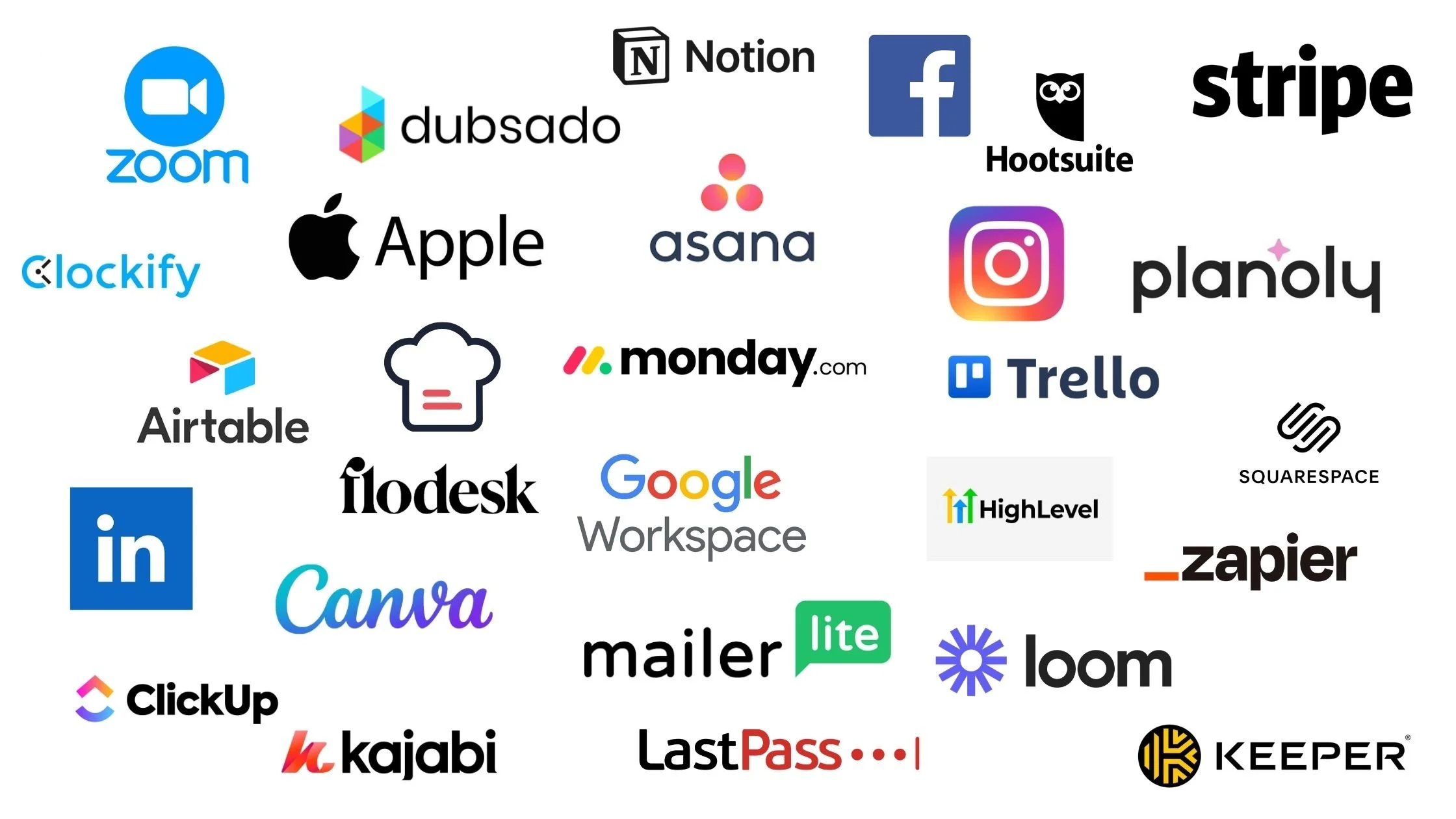
It’s very easy to end up with too many tools when you’re running a small business. A booking system here, an email platform there, a project management tool you barely open, a free trial you forgot to cancel.
Before long, your business feels more complicated than it actually is.
I often work with clients who are at the very start of their business journey, trying to work out what they need to run things properly. The challenge is rarely a lack of tools. It’s usually the opposite. There is an overwhelming amount of tech available, all promising to make things easier, faster, or more professional.
Some people are drawn to the all singing all dancing platforms that can do everything. Others are very hesitant to spend anything at all. And then there are many who experience tech FOMO, signing up for tools simply because they see other businesses using them.
But if you are feeling stuck in all of that, the most useful place to begin is not with more tools.
It is with less.
Start with what you are actually trying to do
Before you look at any software or apps, get clear on what you actually need your business to do.
Not what you think you should have.
Not what someone else is using.
Just your actual day to day reality.
For example:
Do you need people to book time with you
Do you need to send emails to clients or subscribers
Do you need a place to store tasks and projects
Do you need to take payments
That is it. Start there.
Everything else is secondary.
Know what you already have
Most people already have more tech than they realise.
Before adding anything new, it helps to write down:
What tools you are currently using
What you are paying for
What you actually open and use each week
You will often find gaps, but you will also find duplication.
Two tools doing the same job is one of the most common causes of tech overwhelm.
What are you actually using?
This is where honesty matters.
There is a difference between:
“I use this”
and “I signed up for this”
If a tool is not part of your weekly workflow, it is probably not essential.
A simple question helps here:
If I stopped using this today, would anything actually break in my business?
If the answer is no, it is optional.
A simple digital audit framework
You do not need anything complicated for this. Keep it simple and practical.
Work through these questions:
1. What am I trying to achieve?
Be specific. For example:
Get enquiries from clients
Manage bookings
Send newsletters
Deliver my service
2. What do I already have in place?
List every tool or system you currently use, even loosely.
3. What am I actually using regularly?
Weekly or daily use only. Be strict with this.
4. What is overlapping?
Look for duplication. Two tools doing the same job usually means one can go.
5. What is missing?
Only now do you look at gaps.
This order matters. Otherwise it is very easy to fill gaps that do not actually exist.
One job, one tool
A useful rule of thumb is this:
Each tool should have one clear job.
If a platform is trying to do everything, it often ends up doing nothing particularly well for your needs.
If you have:
three places storing tasks
two email systems
multiple ways of collecting enquiries
You are not more productive. You are just splitting your attention.
Keep it simple enough to maintain
The best system is not the most powerful one.
It is the one you will actually use.
Simple systems:
are easier to update
reduce decision fatigue
are less likely to break when you are busy
Complex systems often fail at the exact moment you need them most, usually because they require too much maintenance.
Where this leaves you
A digital audit is not about stripping everything back to nothing.
It is about creating clarity.
You should end up with:
fewer tools
clearer purpose for each one
a better understanding of your workflow
less mental clutter around “what am I missing”
Most importantly, you stop reacting to tech trends and start choosing tools intentionally. Because the goal is not to have the most advanced setup. It is to have a simple, effective one that supports how you actually work.
If you can open your laptop and understand your system without thinking too hard about it, you are in a good place.