How to Choose the Right Domain Name for Your Website
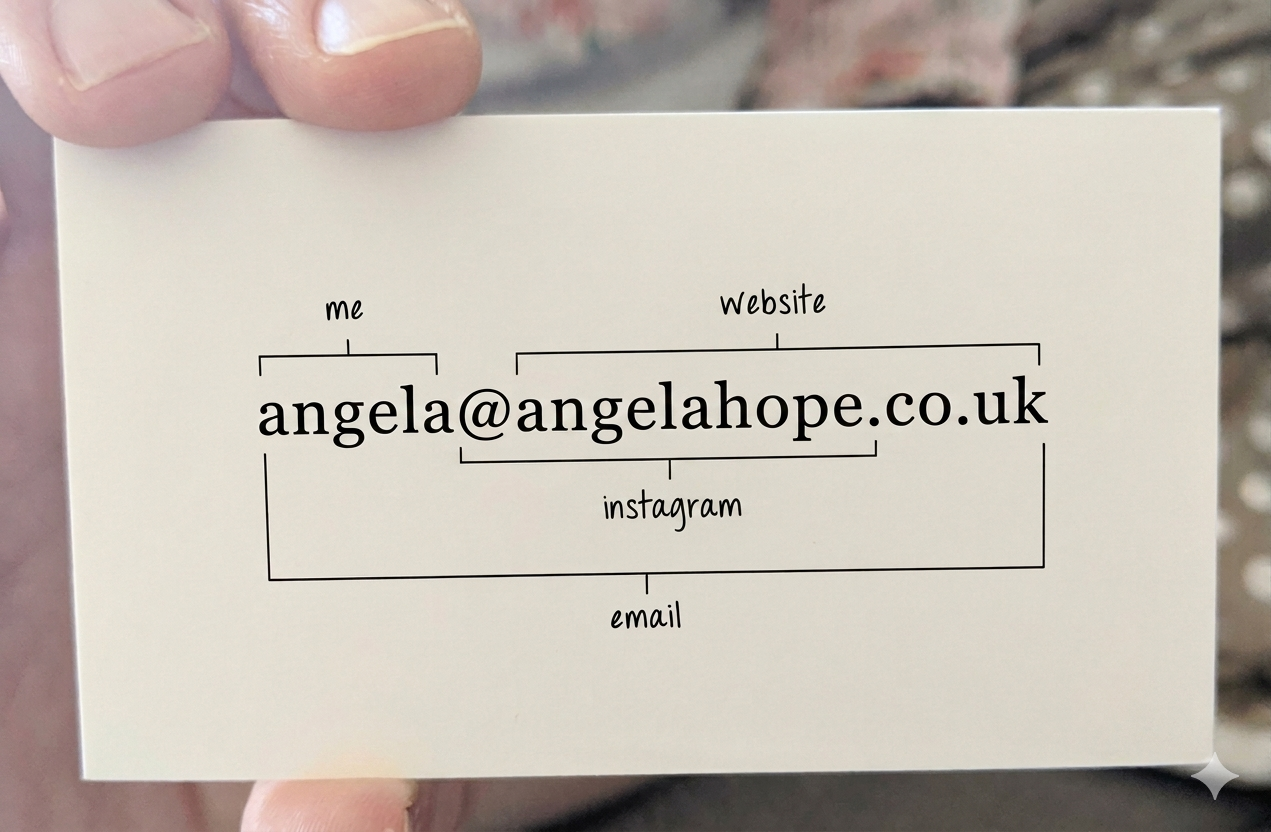
Image credit: I recently saw a brilliant, viral business card layout that mapped out a creator's contact info using brackets. I loved the minimalist efficiency of it so much that I decided to recreate the concept for my own brand...
Your domain name is often one of the first things people see when they discover your business online. It's your website address, but it's also part of your brand, marketing, and credibility.
Choosing a domain name can feel surprisingly difficult. You want something memorable, professional, available, and ideally something that won’t cause problems six months down the line when your business grows.
The good news is that it doesn’t need to be complicated.
Here are some simple tips to help you choose the right domain name for your website.
Keep It Simple
The best domain names are easy to spell, easy to remember, and easy to share.
If someone hears your domain name in conversation, they should be able to type it into a browser without asking for clarification.
Try to avoid:
Unusual spellings
Numbers
Hyphens
Complicated words
Long phrases
For example:
Better: simplewebdesign.co.uk
Harder to remember: simple-web-design-4u.co.uk
The simpler it is, the easier it is for potential customers to find you.
Make It Match Your Brand
Your domain name should feel connected to your business and the way you want to be known.
Many businesses use their business name or personal name. Some build their entire brand around their own name, while others prefer something more descriptive or creative.
For example:
janesmith.co.uk
oakandolive.co.uk
suffolkgardendesign.co.uk
If you’re unsure whether to use your personal name or a business name, it can help to think about how you want your brand to grow over time.
I’ve written more about this in my post Why I'm Returning to a Personal Brand Name and the reasons I chose to use my own name:
https://www.angelahope.co.uk/blog-posts/why-im-returning-to-a-personal-brand-name
Choosing a domain that’s too specific can also become limiting if your business evolves.
For example, bestweddingphotographyipswich.co.uk might feel restrictive if you later expand into other types of photography or work outside your local area.
Aim for something that gives you room to grow.
Consider a Call-to-Action Domain
While many businesses use their name as a domain, another option is to use a domain that clearly describes the action you want people to take.
For example:
bookyourdesignday.co.uk
letsbuildyourwebsite.co.uk
startyouronlinebrand.co.uk
A call-to-action domain can be powerful because it immediately communicates what you do and encourages people to take the next step.
This approach tends to work best when:
You offer a clear, specific service
You sell a signature offer or package
You want your positioning to be very direct and action-focused
One useful option is to treat this as a secondary or “empty” domain. In other words, you don’t have to build your website on it at all. Instead, it simply redirects to your main domain.
For example, someone types in bookyourdesignday.co.uk and is automatically taken to yourmainbusiness.co.uk.
This gives you the benefit of a memorable, marketing-friendly domain without losing the flexibility of your main brand domain.
However, it’s still worth thinking long-term. If your services evolve or expand, a highly specific domain could become restrictive if it’s used as your primary website address.
As with most branding decisions, there isn’t a single “right” answer. It depends on how you want your business to feel and how flexible you need it to be.
Don’t Chase Keywords
Years ago, people often packed keywords into domain names because it could help with search rankings.
Today, Google is much more sophisticated.
Having a keyword in your domain can provide some context, but it won’t automatically boost your rankings.
Your content, website structure, user experience, and overall SEO strategy matter far more.
Instead of forcing keywords into your domain, focus on building a strong, memorable brand.
Choose the Right Extension
For UK-based businesses, .co.uk remains a popular and trusted choice.
Other common options include:
.com
.uk
.net
.online
.studio
If your audience is primarily in the UK, a .co.uk domain often works perfectly well.
If possible, it can be worth securing multiple versions of your domain to protect your brand. For example, owning both the .co.uk and .com versions can help avoid confusion and protect your identity.
Check Availability Everywhere
Before committing to a domain name, check that it’s available across your online presence.
This includes:
Domain registration
Social media usernames
Professional email addresses
Consistency makes it easier for people to find and recognise your business.
For example:
Website: mybusiness.co.uk
Email: hello@mybusiness.co.uk
Instagram: @mybusiness
A consistent brand presence looks professional and builds trust.
Think About Email Addresses
Your domain name will likely become part of your email address.
Professional email addresses instantly create more credibility than free email accounts.
For example:
looks far more professional than:
Before purchasing a domain, imagine seeing it in an email signature, on a business card, and across your marketing materials.
Say It Out Loud
This is one of the simplest tests you can do. Tell a friend the domain name and ask them to spell it. If they struggle, ask questions, or spell it incorrectly, that’s usually a sign it may be too complicated. The best domain names are often the ones that feel obvious.
Don’t Overthink It
Many business owners spend weeks trying to find the “perfect” domain name. In reality, your success won’t be determined by whether you chose the perfect website address. A good domain name that is clear, professional, and aligned with your brand is more than enough. The most important thing is getting your website live and helping people find your business.
Keeping it simple
Choosing a domain name doesn’t need to be stressful.
Keep it simple, make it relevant to your brand, think long-term, and check availability before you commit.
Remember that your domain name is just one part of your online presence. A clear message, helpful content, and a well-designed website will always have a bigger impact than finding the “perfect” domain.
If you’re planning a new website and need help choosing a domain name, setting up professional email, or getting your site online, I’d be happy to help.