
Why I Use Google Docs for My Workbooks (Instead of Canva)

When it comes to creating workbooks, checklists, or ebooks, Canva often feels like the obvious choice. It’s polished, it’s pretty, and it promises beautifully designed PDFs. But here’s the thing: I don’t use Canva for my workbooks. I use Google Docs — and I’ll tell you why.
Things move quickly
Business (and online content) doesn’t sit still for long. Lead magnets need refreshing, workbooks need tweaking, and sometimes whole sections need rewriting. If I create something in Google Docs, updating it is as simple as opening the file and making changes. If I share the live doc instead of a PDF, the update is instant — no need to re-upload or resend.
With Canva, every update means opening the design, exporting a new PDF, and replacing the old version everywhere. It’s a lot of extra steps for something that might only need a one-line change.
Canva can be a procrastination trap
Don’t get me wrong — Canva is brilliant for design. But if you’re anything like me, it’s also where “just five minutes” can easily turn into an hour of fiddling with fonts and colours. It feels productive, but really it’s procrastination in disguise.
Google Docs strips all of that away. The formatting is clean, simple, and quick. You don’t have to think about matching fonts or lining up graphics — you just get the words down and get it out there.
👉 If Canva feels like a rabbit hole for you too, you might like my post on Tidy Up Your Canva: Simple Steps for a More Organised Workspace.
Updating on the fly
Sometimes I want to share something with my audience quickly — an idea, a framework, a checklist. With Google Docs, I can create, polish, and share in minutes. And if I spot a typo later or want to add a section, I can fix it instantly.
When you share a Google Doc link rather than a static PDF, your readers always see the latest version. That flexibility is worth far more to me than a perfectly aligned Canva design.
Easier to let things go
Here’s the reality: not every lead magnet or freebie is going to land. Some ideas just don’t work — and that’s fine.
But if I’ve spent hours in Canva making something look gorgeous, I’m much more likely to cling onto it, even if it isn’t performing. When I create in Google Docs, I can move on quickly if it’s not working. Less time invested means less pressure to make it “stick.”
Let’s be honest about freebies
If you’re like me, you’ve probably got a folder full of downloaded freebies you’ve never looked at again. Your audience is no different.
That doesn’t mean you shouldn’t create valuable resources, but it does mean they don’t need to be perfect. A straightforward Google Doc that’s easy to read and quick to use is often more useful than a beautifully designed PDF that gets forgotten.
The best of both worlds
This doesn’t mean I never use Canva. In fact, I often add simple visual touches — like banners or section dividers — to my Google Docs to make them feel polished without falling into the Canva time trap.

Before adding fancy tools and automations, make sure your foundations are solid first. Simple systems almost always beat complicated tech stacks.

Too many tools and nowhere feels organised? Bringing your business under one roof can simplify your systems, reduce overwhelm, and create a calmer way to work.

It’s easy to end up with too many tools in your business. A digital audit helps you step back, simplify your tech, and focus only on what you actually use.
After trying complex platforms like ClickUp and Monday.com, I realised the simplest systems work best. Discover my hybrid approach using bullet journalling and Apple Reminders — a setup that’s easy to maintain, keeps tasks clear, and actually helps me get work done.
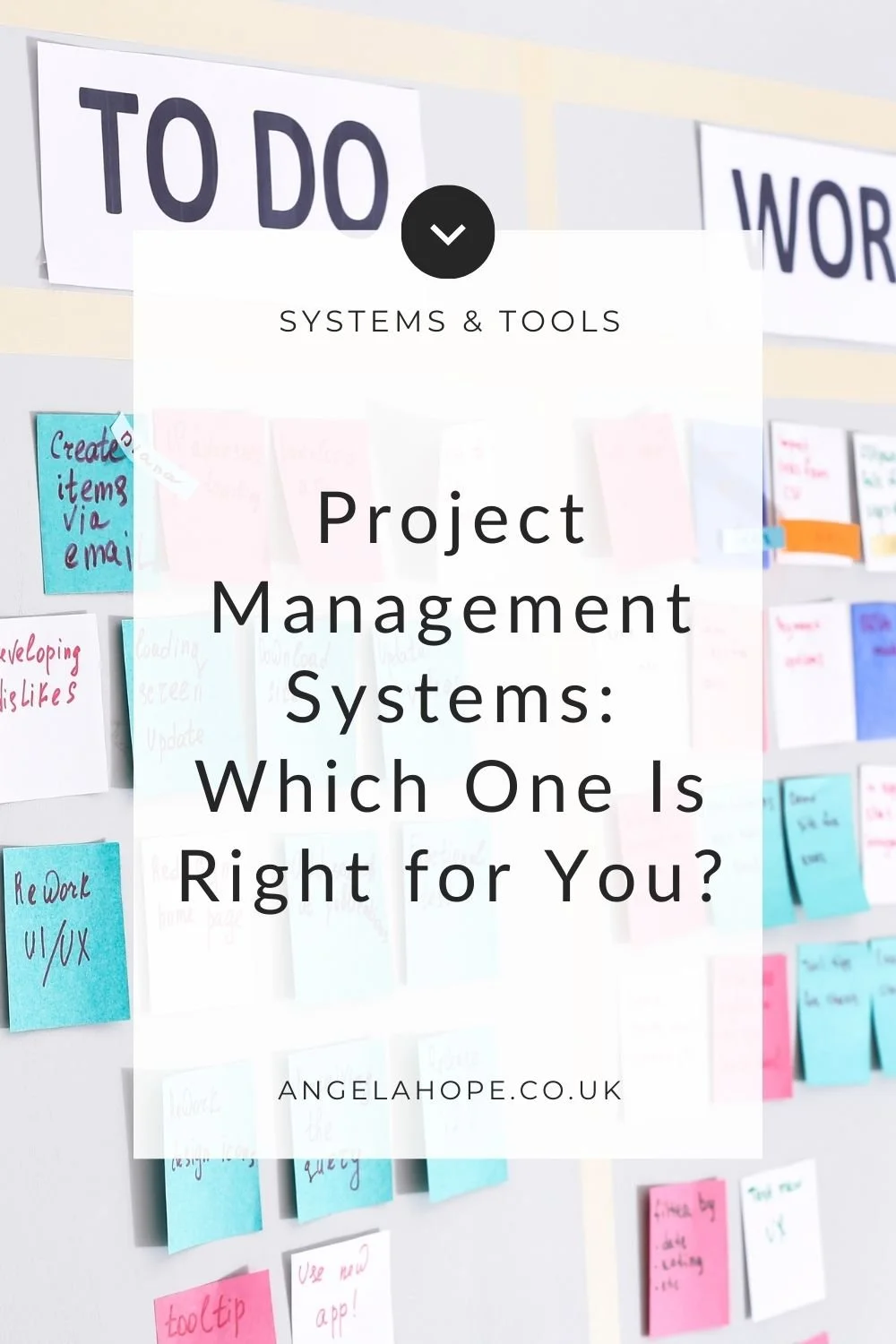
Feeling overwhelmed by project management tools? Choosing the right system doesn’t have to be complicated. Learn how to identify a tool that fits your workflow, avoid decision fatigue, and keep your business organised without unnecessary complexity.
Make sure nothing gets missed when you publish a blog post. Follow this simple, step-by-step checklist to streamline your process, protect your work, and optimise for SEO.
Everything you need to set up a simple, streamlined appointment booking system—including availability, appointment types, reminders, and payment settings.
Client onboarding doesn’t have to be complicated. Discover the key stages—from first contact to prep work—that make every project run smoothly, reduce stress, and create a calm, professional experience for your clients.

You’ve probably heard people talk about marketing funnels — but what exactly are they? If you’ve ever wondered how to take someone from discovering your business to becoming a paying client (without manually chasing every lead), a marketing funnel is how you do it.

Email marketing for small business doesn’t have to be complicated. In this post, I’ll show you how to choose the right tool, set up a simple system, and start connecting with your audience — without the tech overwhelm. Perfect for small business owners who want an easy, effective way to stay visible.

Most small business owners treat their website like a one-off project. Something to launch, tick off the list, and move on from. But here’s the truth: your website isn’t just an online brochure — it’s part of a bigger online business system that keeps your business running smoothly behind the scenes.

When it comes to creating workbooks, checklists, or ebooks, Canva often feels like the obvious choice. It’s polished, it’s pretty, and it promises beautifully designed PDFs. But here’s the thing: I don’t use Canva for my workbooks. I use Google Docs — and I’ll tell you why.

CRM systems often get a reputation for being big, complicated, and intimidating — and to be fair, some of them are. But if you’re a small business owner, you don’t necessarily need all the bells and whistles. There are simpler, more straightforward options out there that can help you stay organised without overwhelming you.

AI has exploded over the last few months, quickly weaving itself into our digital lives. Text messages, voicemails, email, social media, and even Google look very different from how they did just 12 months ago.

You’ve poured your energy into writing, designing, planning—or maybe you’ve outsourced it all to a professional. You’ve done the hard work… so why hasn’t it gone live?

Web Hosting, Email Hosting, Domain Hosting: What’s What?
If you're setting up your online presence and finding all the tech terms a bit of a minefield, you're not alone.

If you’re a small business owner, coach, or service provider, chances are you need a reliable way for clients to book time with you—without the back-and-forth emails. But with so many schedulers out there, which one is right for you?
In this post, I’m comparing five popular standalone appointment scheduling systems.

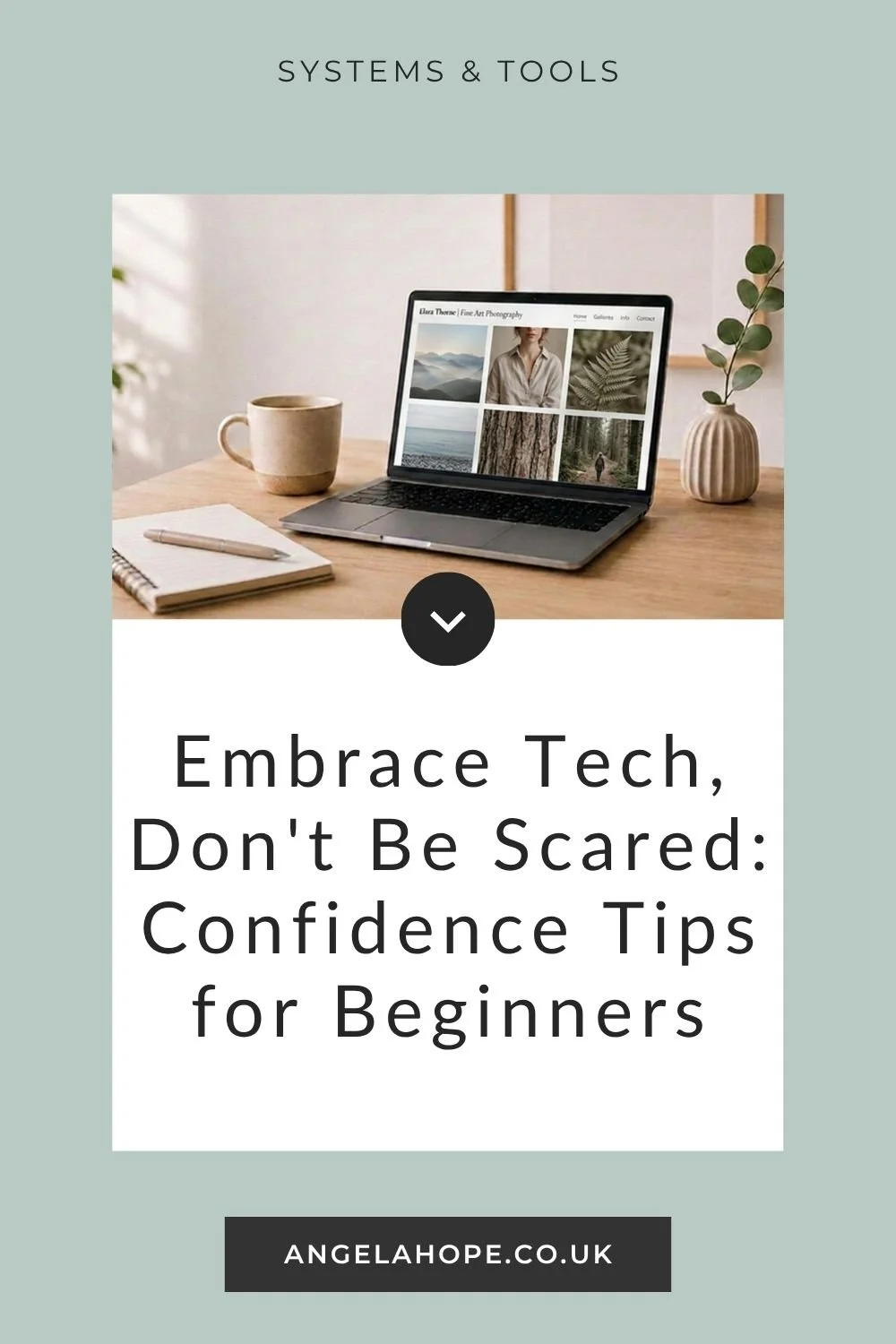
Ever feel like you’re just winging it? In business? In life? In being an adult? Same. Every single day. But here’s the secret: so is everyone else—especially when it comes to tech.

I was recently tagged in a Facebook networking group. The request was for a Squarespace website, an admin email address, and someone super reliable. Someone kindly recommended me, and I quietly shared my website link in the reply.

When you’ve had a busy week like me, the last thing you want is digital clutter adding to the chaos. A few small tweaks can make your tech life so much easier - and help you go into the weekend feeling calm and in control. Here are five quick wins you can do in just 10 minutes.

Running a business comes with enough challenges—tech issues shouldn’t be one of them. By setting up a simple tech maintenance routine, you can prevent digital clutter, security risks, and frustrating system failures before they happe

Starting a business can feel overwhelming, especially when it comes to choosing the right tools and technology. With so many options out there, it’s easy to get lost in a sea of apps, platforms, and subscriptions.
 Hi I'm Angela
As a Squarespace web designer and digital systems expert I am passionate about keeping life (and work) as simple as possible.
Work With Me | Blog | Email